
All articles
20 articlesEverything from the team, newest first.
XQuad in practice: two demos, one toolchain
Two of our demos now run on XQuad, the toolchain behind the Quip Virtual Machine. One is a trading game that close to a hundred people played at Quantum.Tech World in June. The other is a logistics yard where a D-Wave chip and a classical annealer compete to plan the day's trucks. They use XQuad differently, and that is the point of this post. The trading game shows the solver layer and the network order on a QUBO it already had. Parcel Forum shows the constraint language, with the problem writ
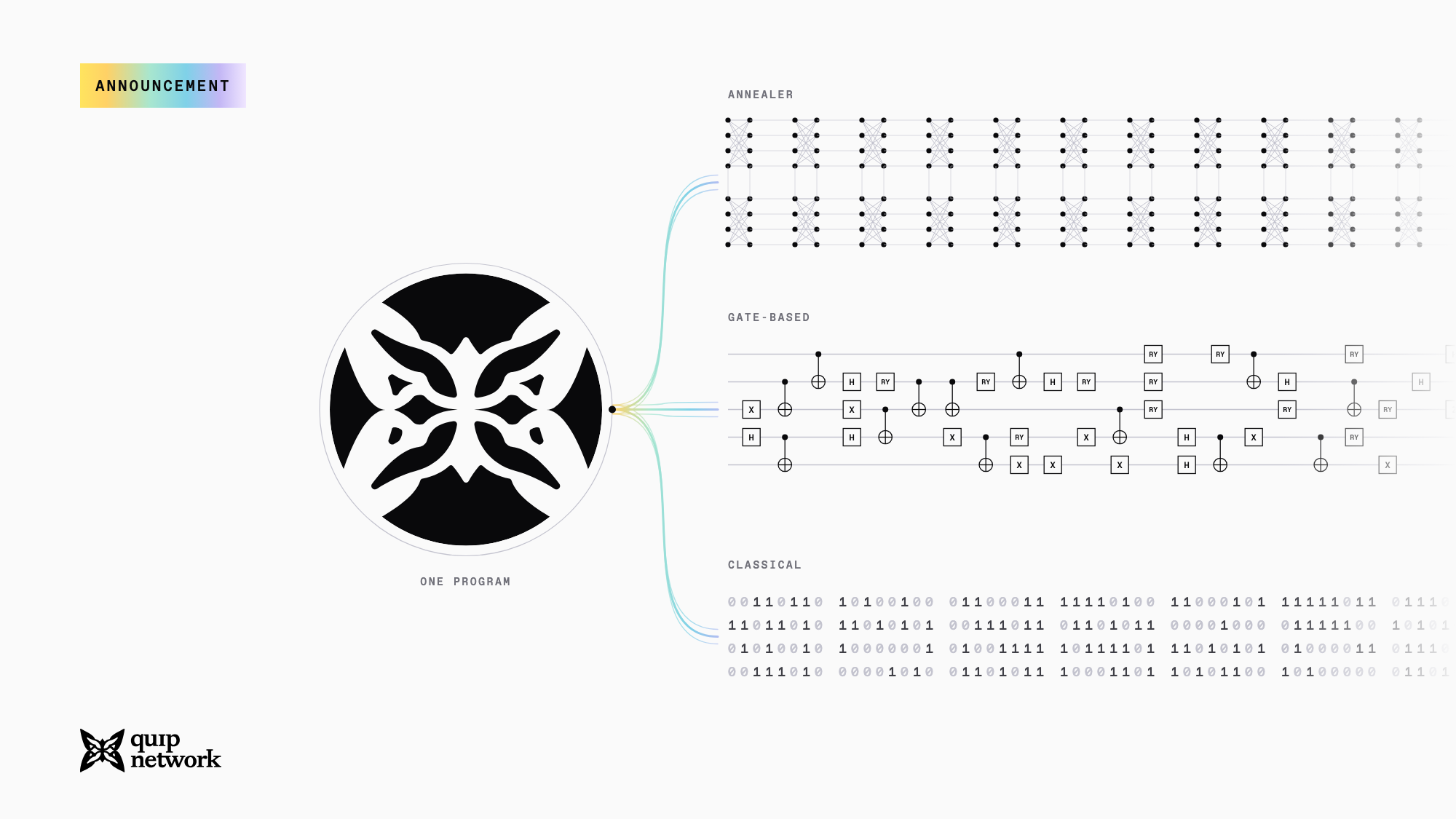
QVM Is Live: One Unified Language for Quantum and Classical Hardware
QVM is live on testnet: one constraint-based language for annealers, gate-based quantum computers, and classical hardware, with the cost of every run quoted before it executes.
Is Quip Network legit? What we are, who built it, and what you can check
Yes, and here is how to check rather than take our word for it. Quip Network is built by Postquant Labs, the code is public, the contracts have been reviewed by an independent auditor, and the testnet has been live since April 2026. It’s worth saying first: if you searched for Quip and landed on reviews of a toothbrush or a Salesforce document tool, those are different companies that share the name. This is quip.network, and we work on post-quantum security and distributed quantum compute. Wh

Postquant Labs Joins the Quantum Alliance as a Founding Contributor
Nine blockchain organizations are launching the Quantum Alliance, an open standards body that will define what post-quantum readiness means for the blockchain industry. Postquant Labs, the team building Quip Network, is a founding contributor.
You can run a job on a quantum computer this week. Here's how the access problem got solved
Quantum hardware exists and it works. And it is no longer sitting only in university labs: quantum computers from companies like IBM and D-Wave are being accessed by researchers and businesses today, with applications ranging from optimization and logistics to chemistry and materials science. The bottleneck is not whether the technology is here, but who can work with it. Getting time on a quantum computer has usually meant a consulting engagement, a reserved-time contract, and a specialist on y
When will quantum computers break encryption? The honest timelines
Nobody knows exactly what year that quantum computers will break encryption, and anyone who names one is selling something. What exists instead is a range of serious estimates, a set of government deadlines, and one deadline that has already passed. The threat When quantum computers reach critical mass, three cryptographic systems will fall in sequence: ECC-256 (crypto), RSA-2048 (banking and web), RSA-4096 (government and military). Breaking RSA or elliptic-curve encryption takes a large, e
Store now, decrypt later: the attack that starts before the computer exists
Quantum threats are unique. Store now, decrypt later is a strategy where an attacker records encrypted data today, stores it, and waits for a quantum computer capable of breaking the encryption to exist. The interception happens years before the cryptography even breaks, which means for long-lived secrets, the attack has already started. The deadline to secure secrets arrives before the machine does, because an attacker can record encrypted traffic now and decrypt it once the hardware exists.
Which blockchains are quantum resistant? The chain-level answer
Almost no blockchains are quantum resistant. Every major blockchain in use today settles ownership with elliptic-curve signatures, which a large enough quantum computer breaks. The work to change that is real and it is public, so it can be checked chain by chain rather than argued about. The test Quantum resistance means one thing at the chain level: the signature scheme that authorizes a spend rests on math a quantum computer cannot break. NIST finalized signature replacement schemes in 2024
Is Ethereum quantum resistant? The current answer
No. Ethereum today is not quantum resistant, and the interesting part is what that specifically means, because most of what people fear is wrong and the real exposure is narrower and more actionable. What breaks and what does not Ethereum accounts are secured by ECDSA signatures over the secp256k1 curve. A sufficiently large, error-corrected quantum computer running Shor's algorithm derives a private key from an exposed public key, which forges transactions from that account. That machine doe
What is a post-quantum wallet?
A post-quantum wallet is a wallet whose ownership rests on cryptography no known quantum computer can break. That one sentence does a lot of work, so here is what it means in practice and how to tell a real one from a label. The problem it solves Ordinary crypto wallets, MetaMask accounts and hardware wallets alike, prove ownership with elliptic-curve signatures. Shor's algorithm on a large enough quantum computer breaks those, deriving your private key from a public key you have already expo
QVRF Is Live: The Only True Randomness Is Quantum
QVRF is live: true randomness generated on real quantum hardware, with a transcript anyone can re-run to check where each number came from. Quantum Echoes, the first project built on it, is a free open edition mint on Ethereum.
What does it actually cost to run a job on a quantum computer in 2026?
Quantum vendors quote most of their prices on request, and the ones they publish sit on pages almost nobody reads. We go through the three ways to buy quantum compute in 2026, what each one charges you for, and why paying for an answer differs from paying for the machine.
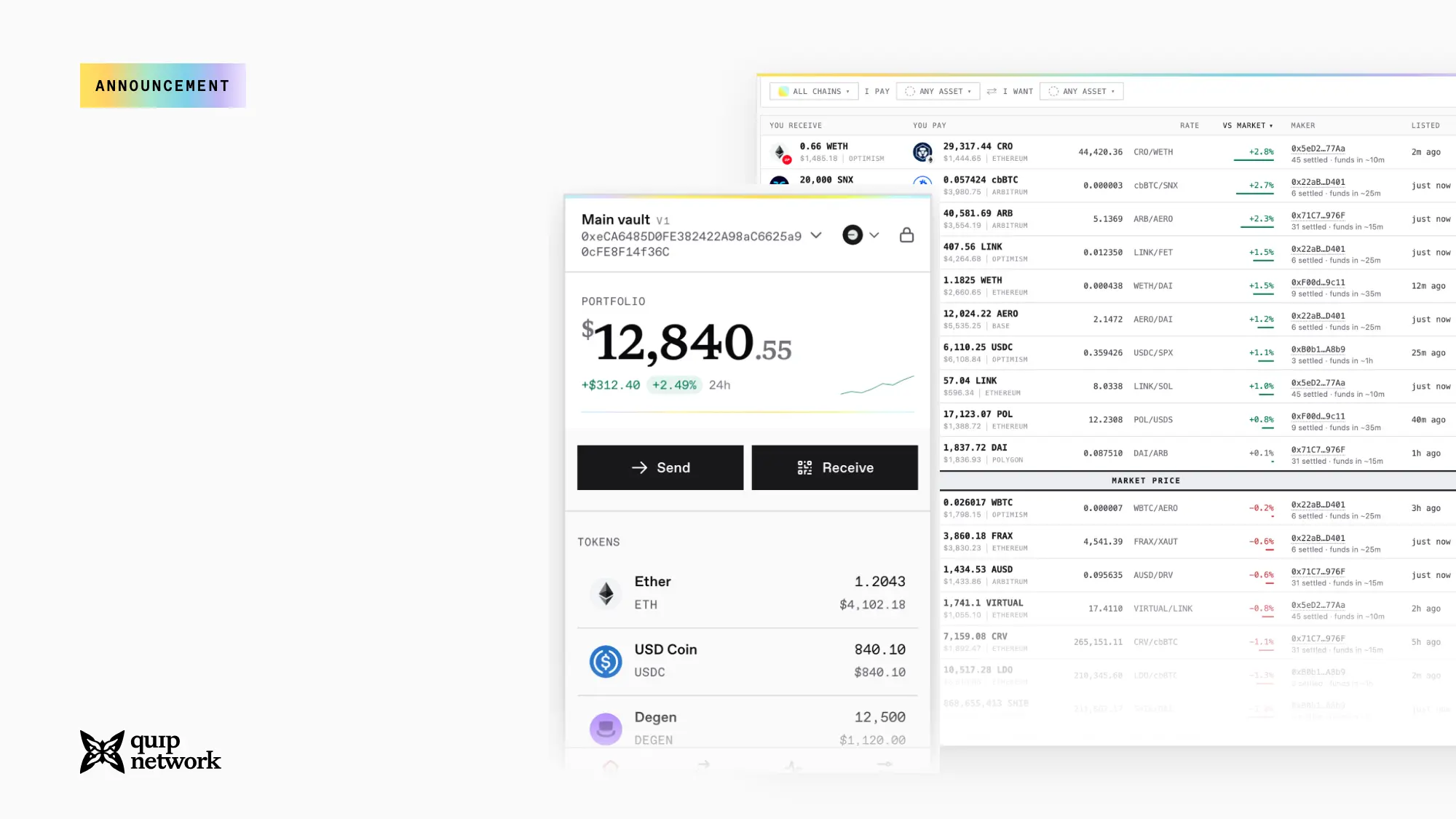
QuipSwap Is Live: Post-Quantum Swaps Anywhere to Anywhere
Cross-chain bridges accounted for 69% of all cryptocurrency stolen in 2022, and the largest DeFi loss of 2026 so far was another bridge exploit worth $292 million.
Can a quantum computer break Bitcoin?
Every few months a quantum computing headline sends this question around again, and the answers on offer run from "tomorrow, sell everything" to "never, ignore it." The accurate answer is more specific than either, and it turns on which part of Bitcoin you mean. The short version No quantum computer that exists today can break Bitcoin or Ethereum. The machine that could is being built in public, by teams at Google, IBM, IonQ and Quantinuum. What it threatens is narrower than most coverage sug
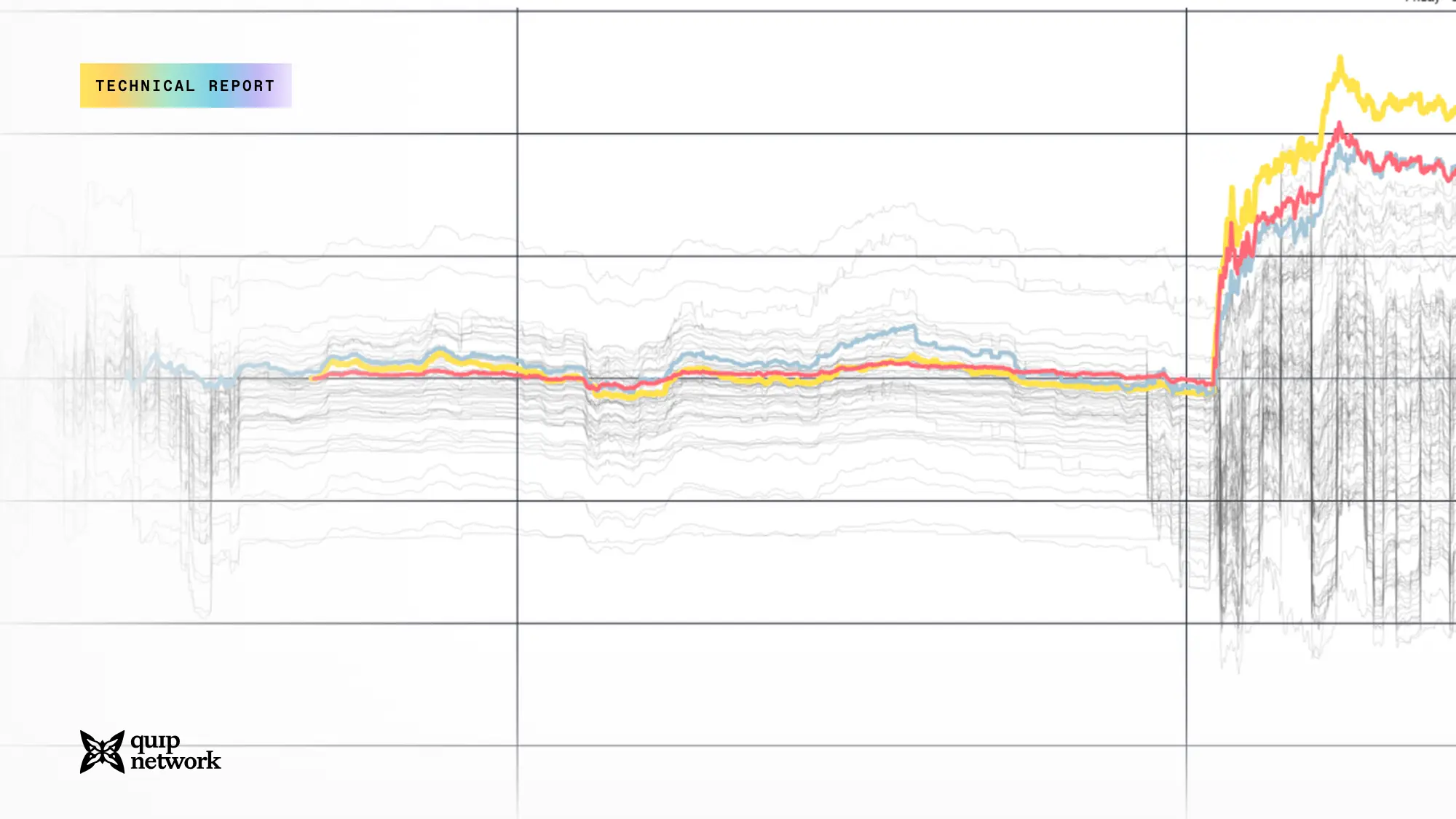
Quantum Annealer Versus Classical Solver on Live Portfolio Optimization
At our Quantum.Tech World 2026 booth, 98 people built portfolio-optimizer agents and every rebalance raced a classical solver against a D-Wave quantum annealer. Here is the method, and all 1,930 head-to-head results.